Showing posts with label Vegetables. Show all posts

Tuesday, August 1, 2017

Seed Vault under threat

Photo taken from here.

Ahhhhh, sounds like some of our calculations were off. Protect those seeds, but yet our own efforts were thwarted by our own behavior.

Unusually high Arctic temperatures caused permafrost to melt and seep into the “Doomsday” seed vault—a fail-safe trove intended to protect food supplies in case of a global calamity—it was revealed last week. The Svalbard Global Seed Vault, which is buried in a frozen mountain on a Norwegian island, stores some 500 million seeds from around the world. But late last year temperatures soared on Svalbard, pushing the permafrost around the vault above melting point. Water seeped into the entrance tunnel, but didn’t reach the seeds. “It was not in our plans to think that the permafrost would not be there,” said Norwegian official Hege Njaa Aschim.

Taken from the June 2, 2017 print edition of The Week Magazine.

Wednesday, July 19, 2017

A global obesity crisis

But it tastes so good....

And if we didn't have companies making and selling all this processed food what would people do for a living so they can buy more stuff/food? Farm? Guffaw! Don't be ridiculous. We'd be putting people out of jobs. We need this so that we can make more pharmaceuticals to be sold. If we got rid of that, then what would the people in the pharmaceutical industry do for money? It all spirals if we change this. Think of all that job loss.

I am so ready to get some land and try my hand at organic farming. Wish actually I knew what to do and had a strong back. But maybe I could have my llamas and their nutrient-rich poop.

Bringing Western food to the developing world has a major downside: More than 2 billion people across the globe are now overweight, and it’s taking a toll on their health, new research reveals. “Excess body weight is one of the most challenging public health problems of our time, affecting nearly 1 in 3 three people,” study author Ashkan Afshin tells The Guardian (U.K.). After analyzing data compiled on 68.5 million people in 195 countries, a 2,300-member research team found that obesity rates have doubled since 1980 in 73 countries. Today, 10 percent of all people are considered obese—meaning their body mass index, a height-weight ratio, is 30 or above. That includes nearly 13 percent of children in the U.S., up from 5 percent 37 years ago. Experts contend that poor diet is fueling the global obesity epidemic as more people around the world gain access to cheap, processed foods that are devoid of nutrients but loaded with chemicals and calories. Even if people are overweight (with a BMI between 25 and 29) but not officially obese, says researcher Azeem Majeed, that’s still associated with heart disease, cancer, and other chronic health issues. “The risk of death and diseases increases as your weight increases.”

From the June 30, 2017 print edition of the Week Magazine.

Monday, April 10, 2017

Diet key to weight loss


So, exactly how many times do we need to hear this to get it? I have asked the question many times... as clearly I don't yet get it. I ate a quesadilla for lunch today and can't get the lump out of my stomach. I have been having this trouble for weeks now... don't know why it has begun, but I am constantly feeling awful. (Bought a papaya to help with digestion... not sure it's working, but can I say, that thing has a distinct smell of vomit... I swear... no wonder people think it helps with digestion. So, does freezing it for shakes kill the benefits? Any-who....)
Exercise has many proven health benefits, but those who dutifully log miles on the treadmill in the hopes of shedding stubborn pounds may want to reconsider their approach to weight loss. In a new study, researchers at Loyola University in Chicago found that healthy eating habits appear to be more important than exercise for long-term weight control, reports LiveScience.com. The team analyzed the physical activity and weight fluctuations of roughly 2,000 adults from the U.S., Ghana, Jamaica, South Africa, and the Seychelles. In each of the five countries, many of those who did 2½ hours of moderate weekly exercise actually put on more pounds over two years than their more sedentary peers. The most likely explanation for this? Exercise tends to boost appetite, meaning active people eat more than they otherwise would. The findings suggest that physical activity alone is “not enough to prevent weight gain,” says lead author Lara Dugas. “What we really need to look at is what people are eating.”

Taken from the March 3rd edition of The Week Magazine.

Thursday, March 23, 2017

Eat Produce, Live Longer


This should not be a surprise to us. Why is it so frickin' hard?

People striving to improve their health by eating more fresh produce may want to double down on their efforts. After analyzing 95 studies on diet and well-being, researchers from Imperial College London have concluded that we should be aiming to eat 10 portions of fruit and vegetables a day, rather than the five portions recommended by the World Health Organization. They found that daily consumption of 28 ounces of fresh produce was associated with a 33 percent reduced risk of stroke, a 13 percent drop in cancer risk, and a 31 percent lower risk for premature death. “Fruit and vegetables have been shown to reduce cholesterol levels and blood pressure, and to boost the health of our blood vessels and immune system,” the study’s lead author, Dagfinn Aune, tells TheGuardian.com. These benefits may be linked to valuable nutrients found in fresh produce, such as fiber, glucosinolates, and antioxidants, which can help prevent DNA damage.

Taken from the March 17th edition of the Week Magazine.

Friday, May 13, 2016

Popular Medications tied to Brain Damage

Huh, how do you like that little tidbit of information? And I think I just heard on the radio on the 4th that the third highest cause of death is hospital mistakes, though they don't track hospital deaths in that category. (versus airline crashes, etc., which they track and disseminate best practices to pilots.)

EAT FOOD! (Not too much, mostly plants.)

I swear, we only have ourselves to blame. Though I can't persuade my husband to live on a farm and grow our own vegetables. I would love to have some farm animals, but I suppose I am romanticizing it. I am sure I don't have the stick-to-it-iveness needed for such an endeavor. Dang! I'm too soft! Though I do have ideas for a commune with all my besties and a lovely communal kitchen where we can benefit from all the goodness of community! And dancing! (I just heard on the radio that dancing with a group doing the same type of dancing raises the pain threshold... I better find that information and write a little blog post on that! Ok, note to self: add another section to my Commune Plan entitled Dance Night!)


Your favorite cold medicine could be shrinking your brain. A new study reveals that drugs used to treat colds and a range of other common health issues, including allergies, heartburn, hypertension, insomnia, and depression, may erode gray matter and increase the risk for dementia and other cognitive problems in older adults. Over-the-counter and prescription medications, such as Tylenol PM, Benadryl, Claritin, Dimetapp, Paxil, Xanax, Zyrtec, Lasix, and Coumadin, belong to a class of drugs known as anticholinergics. They work by blocking acetylcholine, a chemical that transmits electrical impulses between nerve cells. Using PET and MRI scans, researchers from Indiana University School of Medicine examined the brain structure and metabolism of 451 people with an average age of 73. The study found those taking anticholinergic drugs had smaller brains and lower levels of glucose metabolism, particularly in the hippocampus—a brain region involved with memory that is vulnerable to early-stage Alzheimer’s disease. People on anticholinergics also performed less well on tests measuring short-term memory and executive functions, including planning, verbal reasoning, and problem solving. Alzheimer’s patients are deficient in acetylcholine, which is why, the researchers warn, these drugs could trigger or worsen the disease. If taking them is absolutely necessary, study author Shannon Risacher tells Time.com, “I’d suggest that doctors monitor medications and their effects, and use the lowest dose that’s effective.”

Taken from the May 6th edition of the Week Magazine.

Tuesday, October 27, 2015

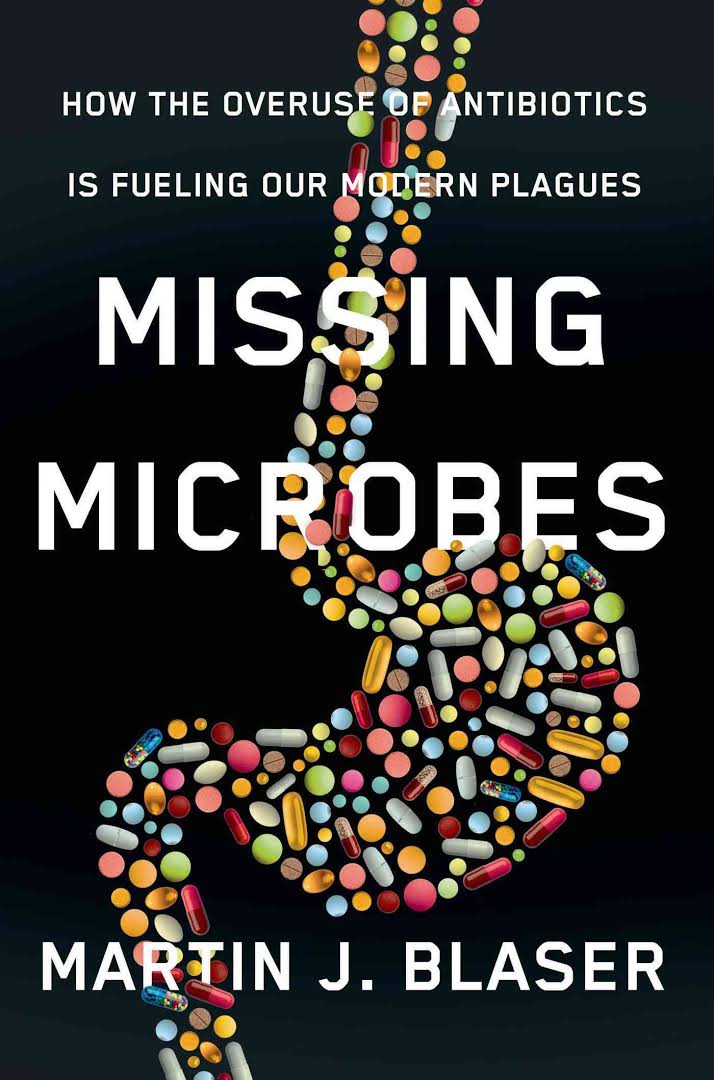
Missing Microbes - by Dr. Martin Blaser

Wow is all I can say. The premise is that we have wiped out all the good microbes along with the pathogens in both our bodies and our environment through antibiotics, mostly. Dr. Blaser is suggesting/hypothesizing that our recent chronic diseases are a result of our badly made choice to declare war on the microbes in our environment.

I like the idea that microbes are even more important than us... I mean, just think, we came from primordial ooze, why would we think they are somehow fewer or less important that we are? Apparently we have 10 times as many microbe cells on and in our bodies than we do human cells. I remember being struck by the fact that if we removed the fecal matter from our digestive tracks we would learn that the microbes in our GI tract weigh as much as our brains... suggesting, they are as important an organ to our survival as our brains... I liked that idea.

It was also suggested that perhaps it is the microbes in and on our bodies that 'made' us human... That combination of microbes allowed us to evolve in this manner.... I like that idea, too.


We have explored/discussed microbes and health in a few other places:
Here, for example about mood and digestion.
here, in the very first month of writing my blog about health, travel, genealogy and fiber art.
And here, where we discuss gluten, but ignore what Dr. Blaser has suggested about the fact that perhaps we are killing the microbes which can process the gluten in our systems.

All I know is that I am going to do my best now to eat more fermented vegetables/foods to reintroduce some beneficial microbes, not going to wash my hands as often (some people think that is so gross, but if I know I have been around someone who is fighting a cold/sick I will wash my hands), I will add some prebiotics to my diet,  What else???? Hmmm. I may be crazy, but I am a one person army to reintroduce healthy microbes in to my world and that of my family... whether they want them or not!

Monday, September 21, 2015

Gut Microbiome

I am so excited! I only learned about it this morning, and the course has already begun - a free on-line course on Coursera about the human gut microbiome. Of course the lead professor is from Australia (I assume from his accent) because that is where I originally heard about 'transpoosions'. On a Radiolab podcast interviewing folks in Australia who were doing leading edge research on the bacteria in our digestive tracks.

I spend a lot of time now experimenting with fermenting foods. I have some pickles going right now, plus some yogurt and some asparagus. I recently read that asparagus is particularly good as a pre-biotic, the food we eat which our gut microbiome wants as their food. Other prebiotics include foods such as Jerusalem artichokes and raw onions. (I have been adding raw onions to my salads much to the dismay of my house guests.)

I just found this list of prebiotic foods:

Dandelion greens.
Garlic and onions (and any vegetables in that family, e.g. leeks)
Asparagus.
Bananas.
Chicory (used in coffee substitutes)

We need to find a lawn with lots of dandelions now, don't we?

Here is a link to one of the Radiolab podcasts on the subject. Poop the Magic Gut Cure I am not sure this is the one I first heard, but I love Radiolab, so I am sure it'll be a great listen.

The course is based out of Colorado.


And here one can see the pickles, the asparagus, the kombucha and my attempt at hard cider....

Friday, April 24, 2015

Foodies Reach New Level of Absurdity

Haha.

New York Times food writer Mark Bittman has spent the past few months in Berkeley, home of fellow food-movement leaders Alice Waters and Michael Pollan. Bittman recently took the opportunity to let readers know that the fruits and vegetables there really are as amazing as we’d been told:

The mushrooms were one thing; there were also a dozen varieties of tangerines, ranging from kumquat-size to almost as big as grapefruits. There were an equal number of oranges (including the superior Cara Cara) and sweet limes and, yes, Meyer lemons. There were fresh chickpeas and shishito peppers, red carrots and a dozen different turnips and radishes, Little Gem lettuces along with probably 40 other edible greens.
In the comments, readers chastised Bittman for sighing over local California produce at a time when that state is experiencing drought, but I had a different concern. Reading his essay, all I could think was, the jig is up. The food movement has officially stopped pretending it has anything useful to offer to anyone with ordinary, or even better-than-ordinary, grocery options. When Bittman was still (mostly) writing from New York, it was plausible that someone could follow his example at, say, New Jersey strip mall supermarkets. Now he’s offering up fantasy recipes like “English Peas With Grilled Little Gems, Green Garlic and Mint.”
Criticism of the food movement has centered on the idea that it’s elitist, catering to those who have enough money to buy kale and enough time to find some way of making it palatable. This is a fair point, and one that, with varying degrees of success, food writers take seriously. But the elitism charge has had the unfortunate effect of allowing food-movement leaders to suggest that—with the exception of the proverbial “single mother of four living at the poverty line”—everyone could eat the way they’re advising and is just a nudge away from doing so. This, alas, is not the case.

Elite food writers aren’t just out of touch with the working and middle classes. They are out of touch with people who aren’t elite food writers. They’re oblivious not just to those who struggle to put food on the table, but to those whose jobs don’t send them on tours of Paris’s finest restaurants.

The true villain for the food movement isn’t someone who buys fast food when they should be eating lentils. It’s someone who, despite having the resources to do so, hasn’t researched where his or her food comes from. Grocery shoppers’ desire to purchase fruits and vegetables—a seemingly admirable, or at least innocuous, one—is recast as consumer demand for out-of-season produce—the height of decadence. In 2011, Bittman had some harsh words for these consumers:
We expect a steady supply of ‘fresh’ Peruvian asparagus, Canadian tomatoes, South African apples, Dutch peppers and Mexican broccoli. Those who believe they’re entitled to eat any food any time seem to think that predominantly local agriculture is an elitist plot to ‘force’ a more limited diet upon us.
Bittman lamented the fact that “we have ceased to rely upon staples: long-keeping foods like grains, beans, and root vegetables, foods that provide nutrition when summer greens, fruits, and vegetables aren’t readily available.”

Is Bittman relying on root vegetables in Berkeley? When he’s in Rome learning the craft of pasta sauce? Or when he was on a food tour of Spain with Gwyneth Paltrow and Mario Batali? Along similar lines, I became somewhat less impressed with David Tanis’s remarks about how he for one is going to stick with “end-of-winter vegetables” until the “local and seasonal” green ones sprout, when I noticed he’ll be giving a cooking workshop in Sicily this April. I point these things out not (just) out of culinary envy of New York Times food writers, but because it genuinely does mean something different to be a strict locavore if you travel around all the time, or live in grocery-endowed part of California, or both.

The place I live—Princeton, New Jersey—is not what you’d call a deprived area. The town center has a Lululemon, a Barbour, and an Ivy League university. For those with a car, supermarket options are plentiful—Wegmans, Whole Foods, Trader Joe’s. But buying food-movement-approved groceries is all but impossible. Farmers market season starts in May; a winter market tilts more towards upscale non-essentials—honey, olives, “gourmet nut butters”—than produce. Once that season arrives, even if you make time between 9 a.m. and 1 p.m. on Saturdays, the “big” market is far too limited to be anyone’s grocery shopping for the week, meaning that you need to add on the time—and, ahem, the carbon footprint—of then driving to a supermarket (where not much is local, and bread without added sugar is scarce) for what remains.
But the supermarket is, for the food movement, taboo. Waters avoids them; it was basically an ethnographic adventure when Michael Pollan and Moss deigned to visit one. It’s only acceptable to shop at a supermarket if you’ve been given special dispensation: Sam Sifton allows eating supermarket, out-of-season Brussels sprouts, but only if you must, while Tanis recommends purchasing California (but not South American!) asparagus, should you not find yourself somewhere where “green-tipped spears of wild asparagus had broken through the earth in an area of moist soil near a stream.” That asparagus sounds great, but until it sprouts somewhere in my part of New Jersey, the Peruvian variety will have to do.

by Phoebe Maltz Bovy at NewRepublic.com

Tuesday, April 21, 2015

'Astonishing' Anglo-Saxon Remedy Kills Superbug MRSA

Though I initially read about this in the April 17th edition of The Week Magazine, I took this article/text from Forbes.com.

What an amazing discovery! (But who came up with the idea - and the money - to try it?) I mean, these folks have time on their hands. Brilliant, though. But it does make one wonder... I mean, clearly it is worth testing, but how many things were tested that resulted in no help? So, did Dr. Lee run to a microbiologist and say, "Hey, let's try this?" Or did Prime Minister Cameron call up Dr. Lee and say: "Hey, I was reading Umberto Eco's The Name of the Rose and I got this great idea for something we should try..."

This discovery also makes me think about our food and what we are doing to it. I mean, if we had started to generically modify our garlic would this no longer have been the case? It is funny-interesting that they used wine from a historic vineyard. Would any wine do? Would all our clones of wine grapes work?

I read that some of the only food we have not modified are our herbs because we cultivated those herbs because we valued the taste of the herbs, but many other plants, like spinach and such, have been bred to remove much of their inherent bitterness. That today's cilantro is very close to "ancient" (that might not be the right word) cilantro. Interesting to contemplate.

And, of course, we must ask ourselves if the engineered or bred foods are actually better at healing. I mean, as mentioned in my little blurb about God and chicken, maybe the changes we are making are better. This article doesn't mention if they tried this recipe with modern supermarket bought ingredients.

So, could Dr. Christina Lee be a cousin?

A 1,200-year-old Anglo-Saxon remedy called Bald’s Eye Salve has proven “astonishingly” effective in battling the MRSA superbug, which kills more than 5,000 people a year in the US.

The potion, composed of garlic, onion or leeks, wine, and ox bile, kills up to 90 per cent of antibiotic-resistant Staphylococcus aureus bacteria in mice, according to scientists at the University of Nottingham.

The Mediaeval treatment was rediscovered by Christina Lee, an associate professor who specialises in disease and disability in the Anglo-Saxon and Viking eras, who translated it from old English.

The recipe, including detailed instructions on how long to chill the ingredients (nine days at 4C), was found in Bald’s Leechbook, a leather-bound medical textbook from the 9th Century held in the British Library.

BaldsLeechbook
A page from Bald’s Leechbook (Credit: university of Nottingham/British Library)

“Medieval leech books and herbaria contain many remedies designed to treat what are clearly bacterial infections,” said Dr Lee.
Microbiologists recreated Bald’s Eye Salve as faithfully as possible, even using a wine from a historic vineyard near Glastonbury, and tested it both in vitro and on wounds in mice.

They compared the results to those achieved previously with the individual ingredients.

“We thought that Bald’s eye salve might show a small amount of antibiotic activity, because each of the ingredients has been shown by other researchers to have some effect on bacteria in the lab,” said microbiologist Freya Harrison. “We were absolutely blown away by just how effective the combination of ingredients was.

“We tested it in difficult conditions too,” Dr Harrison told IBT. “We let our artificial ‘infections’ grow into dense, mature populations called ‘biofilms’, where the individual cells bunch together and make a sticky coating that makes it hard for antibiotics to reach them. But unlike many modern antibiotics, Bald’s eye salve has the power to breach these defences.”

Although developed long before the formal scientific method emerged, such remedies could have benefitted from extensive trial-and-error research to determine what worked best.
Many other books survive from the period with other treatments that might be similarly effective, Dr Lee said.

A global hunt for new weapons against antibiotic-resistant infections was launched last year, spearheaded by British Prime Minister David Cameron.

Rand Europe and KPMG calculated that, unchecked, superbugs by 2050 kill 300 million people, more than cancer, and cost the global economy US$1tr.

The population loss alone would cut world economic output by 2 per cent to 3.5 per cent, the report said.

The results of the research on Bald’s Eye Salve were presented at the Annual Conference of the Society for General Microbiology, in Birmingham yesterday.

Saturday, April 4, 2015

The Quest for the Perfect Diet

Ok, so I swiped the entire article as it appeared in the March 20th edition of The Week Magazine.... I suppose I should learn a better way to share these types of articles...

More information to support Marks Daily Apple and Mark Sisson's Primal Blueprint. We Americans have got to get away from our Standard American (Global?) Diet!


A spate of recent studies has upended decades of established dietary advice about eating fat. Is fat now good?


What should we eat?

Mostly vegetables. Veggies of all kinds and colors, including salads and other leafy greens, are loaded with various types of phytonutrients and antioxidants that are essential to healthy living. Many recent studies have shown that people who eat more vegetables and other plant-based foods—such as beans, whole grains, fruits, and nuts—tend to have lower rates of heart disease and other chronic health issues than those who mainly consume animal-based products like meat and cheese. But researchers have also recently discovered that fat, maligned for more than 40 years as the leading cause of weight gain and high cholesterol, can also be part of a healthy diet. “Americans were told to cut back on fat to lose weight and prevent heart disease,” says Dr. David Ludwig, an obesity specialist at Boston Children’s Hospital. Today, “there’s an overwhelmingly strong case to be made for the opposite.”

Can fat really be good for us?

Yes, but not all fats are created equal. Foods like beans, nuts, and fish, which are rich in monounsaturated and polyunsaturated fats, are strongly linked to good cardiovascular health. But several recent studies found that even the saturated fats in red meat, butter, and cheese can be consumed in moderation, and that foods high in cholesterol do not raise cholesterol levels in most people. Those findings run counter to decades-old dietary guidelines from the American Heart Association and the U.S. government, which stated that people should avoid saturated fats because they clog our arteries, causing heart attacks and strokes.

How did we get it so wrong?

Blame bad science. In 1970, a University of Minnesota physiologist named Ancel Keys published his landmark Seven Countries Study, which examined diets across Europe, the U.S., and Asia. He concluded that people who ate a lot of meat and dairy, like Finnish lumberjacks, died from heart attacks at far higher rates than farmers in Crete, whose fish-, fruit- and grain-heavy diet was lower in saturated fats. Critics noted many mistakes in Keys’s study—he looked at the Cretan diet during Lent, when the islanders had given up meat and cheese—but his conclusions were widely accepted because they seemed to make sense. After all, saturated fats are known to raise LDL, or “bad” cholesterol, and higher levels of LDL are a leading indicator of heart disease. But now there is increasing evidence that the type of LDL particles associated with saturated fats, known as pattern-A, are not harmful. “The argument against fat was totally and completely flawed,” says Dr. Robert Lustig, president of the San Francisco–based Institute for Responsible Nutrition.

What effect did Keys’s study have?

In 1980, the federal government issued its first set of dietary guidelines, telling everyone over age 2 to avoid fat. America didn’t get any healthier. Adult obesity rates nearly tripled over the next three decades to 35 percent, while adolescent obesity rates quadrupled. The U.S. now spends $190 billion a year treating obesity-related conditions. The government-backed campaign against fat backfired in part because Americans replaced the calories they got from milk and cheese with calories from refined carbohydrates like white bread and pasta. Carbs turn into sugar in the bloodstream, which increases insulin production and encourages cells to store fat instead of burning it. With less energy available to fuel the body, the metabolism slows down, hunger sets in, and the process repeats itself.

Does that mean carbs are the real problem?

The case against them is strong. But if the low-fat era has proved anything, it’s that focusing on just one aspect of a person’s diet can have unintended consequences. Human physiology is simply too complex for the effects of an individual foodstuff or nutrient to be isolated and properly understood. “We should not be singling out particular components in food and vilifying them,” says Catherine Collins, head dietitian at St. George’s Hospital in London. “We should be promoting a balanced diet with a lot of variety, including some lean meat, fish, whole-grain cereals, fruit and vegetables, even a little wine if you like. Essentially, it’s the Mediterranean diet.”

Is that the ideal diet?

Possibly, but we can’t be 100 percent sure because almost all dietary studies are observational and so have a fundamental limitation. Scientists will monitor the eating habits of test groups for years or even decades, and then draw associations between the subjects’ diet and the diseases they suffer. Such an observational study might show that individuals who eat more vegetables tend to live longer, but it can’t prove causation—that eating more veggies is the reason for that longer life span. Many nutritionists say their best advice is for people to stop obsessing over individual aspects of a particular diet and focus instead on choosing naturally produced foods and avoiding processed foods that are loaded with additives and excess sugar. “If you eat direct from nature, nutrients tend to take care of themselves,” says Dr. David Katz, director of Yale University’s Prevention Research Center. “The cold, hard truth is, the only way to eat well is to eat well.”

Friday, March 6, 2015

Gluten Gets the Boot

I have learned that I am not allergic to gluten - I paid for the expensive tests - but it's elimination does make a difference in my digestion.... I follow the Primal Blueprint as best as I am able, though I screw up a lot, too, but I am doing my best.

The gluten-free craze hit critical mass this year, with a third of Americans claiming they avoid the ubiquitous wheat protein. Food makers have been quick to catch on—and cash in—creating a $9 billion industry. “At least 70 percent of it is hype,” the Mayo Clinic’s Joseph Murray told The New Yorker. “There is just nothing obviously related to gluten that is wrong with most of these people.” But the proof is in the gluten-free pudding, said one convert: “I know that I’m intolerant, because I gave it up and I felt better.” The Week Magazine, 12/31/2014

I am not thrilled to learn, though I am not at all surprised, that this is the next commercial food bandwagon for chasng the profit. Gosh, if we would just support our local farmers - and do our own gardening (gardening is like printing money!) - we would eat so much better and be so much healthier.

Thursday, March 5, 2015

Rethinking fat and cholesterol

OMG, The Week Magazine having changed their on-line presence I now need to jump when the new magazine comes out if I want to share anything with my readers. I have been cutting and pasting to share, but it seems that now they are not providing everything on line for an extended period of time, so if I dally, I loose.

Anyway, how incredible is this below? Now we have come full circle in our thoughts about cholesterol and fat. Mark's Daily Apple has been telling us this for a long time, and now conventional wisdom is catching up. In my humble opinion, it's those dang processed foods which are killing us.

A bad rap
For decades, health experts have issued stark warnings that foods high in fat and cholesterol cause heart disease and other illnesses. But new research has determined that these guidelines, which prompted millions to shun red meat and eggs, were not supported by good evidence and were, in fact, in error. In the late 1970s, Americans were encouraged to reduce their fat intake to about 30 percent of their total daily calories. But after reviewing the research available at that time, a team of British scientists has concluded there was never any evidence that eating less fat would help reduce the risk of heart disease. When Americans were told to avoid meat, dairy, and fat, they increased their consumption of simple carbohydrates such as sugar, white bread, pasta, and processed foods—the real drivers of obesity, diabetes, and heart disease. “The obesity epidemic basically began with the first dietary guidelines,” points out Nina Teicholz, who’s written a book on that topic. Meanwhile, the U.S. Dietary Guidelines Advisory Committee is no longer classifying cholesterol as a “nutrient of concern.” The decision, which reverses four decades of government advice, reflects recent research suggesting that eating foods high in cholesterol does not significantly raise cholesterol levels in the blood or increase the risk of heart disease. Genetics, it turns out, has a much greater effect on cholesterol levels than diet. “We got the dietary guidelines wrong,” Dr. Steven Nissen of the Cleveland Clinic tells USA Today. “They’ve been wrong for decades.”

We all need to return to eating just meat and veggies with some nuts and fruit thrown in for fun - in my humble opinion. (I just wish the pasta, bread, cookies, etc. didn't taste so good!)

Friday, February 27, 2015

Those pesky insects in our food....

We've spoken about this before, here and here. And I can't say that I am ready for it... though I did screw up my courage to ask at a GNC store about beef blood protein.... I don't know whether I would have voted with my wallet on that one, but I did ask the question if they make or sell dried beef blood protein. It was a while ago at this point, but they did not have any on the shelf.

Protein, in all forms, is officially trending. The original superfood, protein builds muscle and aids weight loss, and this year it was pumped into practically everything in the grocery aisles, whether snack chips or Cheerios. But the quest for amino acids may be headed to even stranger heights. Food entrepreneurs are now betting that protein-rich insects—think mealworm bars and milled-cricket flour—will be the next foodie frontier.

I blogged a little bit about the cost of raising protein on the planet here. I believe that raising goats for meat is a much more economical way to get the animal protein - and the goat milk is much easier to digest for many people.

I took the quote from my favorite magazine, The Week, 12/31/2014.

Tuesday, February 10, 2015

Bio Fuel

Another interesting story in The Week magazine's December 5, 2014 edition... This time about bio fuel, but different than the use of animal dung to generate methane for cooking and heating in India and Kenya. I have been occasionally following a young Brown University graduate who moved to Kenya to build bio fuel tanks for farmers - can't remember the name of his company or web site at the moment, very frustrating. (On 2/26 I now remember the name of the company - Takamoto Biogas.)

In any event, this is what I found and thought I would share with the universe:

Taking the No. 2, after a British company unveiled a bus powered by human poop. The 40-seat Bio Bus runs on gas generated by decomposing garbage and sewage generated by people in the area, “including, quite possibly, those on the bus itself,” said a company spokesman.

Come on, you have to admit, this is brilliant. Gross, but brilliant. Now if only we can get over our healthy aversion to our own waste.... I know we need to find it disgusting so that we did not eat where we pooped as an evolving organism, but now that we know so much more about our gut and the role bacteria plays in our health, using a waste product to fuel our ability to get round town, that's pretty good.

Monday, October 27, 2014

Meatless Mondays in Texas

I found this little tidbit in September 19th edition of The Week Magazine.

A Texas elementary school’s decision to offer “meatless Mondays” in the cafeteria has outraged the state’s agricultural commissioner. Todd Staples blamed the meatless menu on an “activist movement that seeks to eliminate meat from Americans’ diets seven days a week.’’ School officials said kids who wanted meat on Mondays could bring their own lunch.

It reminds me of a story I was told by a friend who works at the USDA. She indicated that there was a movement afoot to make the USDA meatless on Mondays too, but the Cattle Ranches put the kibosh on that saying it was against them. BUT, we forget that the USDA is also supposed to represent vegetable farmers, too... so what was the problem? Evidence of the strength of certain groups on our government....

It seems the cattle ranchers are eager for us to eat meat in spite of the fact that if we were to cut some out it would be cheaper - as I indicated here. Again, planting a garden is like printing money. I love that idea!

I have also already posted on the subject of the effects of raising beef on our planet here.

Thursday, August 21, 2014

Scallions in Saratoga Springs, NY - Restaurant Review (and some repurposed family heirlooms)


The Scallions restaurant is right across the street from the NY State Military Museum - so a very nice place to grab a bite after viewing the museum's collection. This restaurant is not on the town's main drag, but it was still very crowded.

The decor was delightful - brightly colored artwork. They even have a lounge which I believe is also considered a gallery. Clearly the artwork is for sale. I did not take a photograph while in the restaurant and I'm afraid I can not capture one from their web site to show you.

For lunch I had a shrimp and fennel salad (with arugula, prociutto, parmesan, artichoke hearts) and a blueberry, mint lemonade (held the vodka, though).

The young wait staff were some of the most attractive people I have seen in a while - and very polite.

I did take one photograph while in the restaurant - I liked these windchimes, though generally I am not fond of windchimes - but these used old silver plate with beads which I thought was a clever repurposing of old family stuff. Two of the windchimes use either a creamer or a sugar bowl, but mostly it is spoons, forks and knives. One way to display old family pieces.....

Sunday, July 13, 2014

Pricey Protein

On my quest to eat good quality protein I am faced with information such as this from The Week Magazine and Bloomberg:

Protein is getting pricey. The cost of beef, beans, bacon, and nine other protein sources jumped 28 percent in the last five years. In 2014 alone, protein prices have risen roughly 5 percent—twice the pace of increase for any other food group.

I suppose this can assist in the general population also eating more vegetables which will help everyone with their overall health. I just read somewhere that planting a garden is like printing money - for what might be very little effort, you can feed yourself and thereby save the outlay of cash. "A penny saved is a penny earned", after all.

Monday, July 7, 2014

True Food Kitchen in Denver


Lunched at True Food Kitchen the other day; sat at the bar and watched the young tatooed bar tenders concoct fabulous looking virgin cocktails. I tried their Bright Eyes which, if I remember correctly, has pear, ginger, beets, carrots, turmeric and pineapple. My husband had the watermelon, honey lemonade. Both were very refreshing, and another nice aspect about them was that one can't drink it too fast. The drinks they were assembling looked fabulous - such beautiful colors and looked so refreshing. I would return just for those - and the 'adult' cocktails, too.

Photo taken directly from their web site.

Lunch was fish tacos and the albacore tataki - both totally worth it. My husband had the caramelized onion & fig tart and a chopped chicken salad. Dessert was a strawberry rhubard crisp. Touchy-feely food is not my husband's favorite food, but he was very pleased with his lunch. $73 before tax and service.

They describe themselves as follows:

You don’t have to be a die-hard Yogi to dine at True Food Kitchen. You need only a desire to give your body nutrients, and your palate something memorable. The basis for the anti-inflammatory diet isn’t meant to deprive a healthy body of great flavors, it’s meant to take popular trends in cuisine and pair them with healthy living.

With a wide, healthy selection of vegan, vegetarian, or gluten free options we offer something for everyone. Try the kale and quinoa, you’ll live longer. Drink the seabuckthorn and acai, you’ll feel better. At True Food Kitchen, we want you to feel better, live longer, and make your mouth happy in the process. It's honest food that tastes really good.

Dr. Andrew Weil started this restaurant and this comes from his web site about the restaurant:

Concept: All True Food Kitchen locations feature dishes that closely adhere to the principles of Dr. Weil's anti-inflammatory diet. They are intended to be a new kind of restaurant: one in which delicious flavors, healthy nutrients, environmental awareness and an inviting atmosphere come together to create an unforgettable dining experience.

Dishes are influenced by Mediterranean, Asian and Californian cuisine, and include soups, appetizers, salads, pasta, rice and noodle dishes, wood grilled dishes, sandwiches and burgers, brick oven pizzas and desserts.

Sample dishes: Wild Smoked Salmon with Shaved Radishes; Lemon Cream & Wasabi Peas; Sashimi Tuna Salad with Avocado, Cucumber, Tomato, Edamame & Ginger; Curry Chicken with Rice Noodles; Tuscan Kale Salad; Cauliflower & Cashews; Herbed Hummus; Green Tea Soba Noodles with Peas; Bok Choy & Lemongrass; Fresh Tomato Pizza with Pasilla Chile & Manchego; Grilled Wild Ahi Sliders with Wasabi, Radishes and Cucumber on Pumpernickel; and Natural Half Chicken with Farro, Walnuts, Dried Fig, Brussels Sprouts & Squash.

Each location features catering, take out, breakfast, a selection of coffee drinks, natural juice blends, hot and cold tea, sparkling wine cocktails, organic and low-calorie beer and sake. All wines are selected based on wineries' commitment to organic, biodynamic and/or sustainable farming practices.

Engrained in True Food Kitchen's ethos is a commitment to a conscious, community-based dining experience - a commitment that ensures that, no matter how many locations are established, True Food will never become what one thinks of as a "chain."

Monday, June 9, 2014

Blaue Gans Restaurant - A Review

I took advantage of my Tribeca location and walked to Blaue Gans two blocks north of my hotel at 139 Duane Street. I am surrounded by plenty of places to eat, but this restaurant was listed on Open Table - and they have schnitzel, so I had to go. I was very happy that I decided to do this, as it got me away from Ancestry.com and Family Tree Maker. Perhaps there was a convergence given I was entering some information about the German side of my family.

I started with the white asparagus and south Tyrolian ham and then had the weiner schnitzel with the potato and cucumber salad. The asparagus and ham was a nice, cold combination of crunch and saltiness. The potato salad had nice mustard and dill flavors and good texture. The schnitzel was a large portion that I could not finish.

I didn't catch the name of my server, but she was attentive yet wasn't fussing over me. The gentleman in charge of the floor did come over and ask how everything was. I brought my book and also had a very good view of the open, tall dining room with it's forty + tables, so I was very content and entertained.

Looks like Blaue Gans is a part of a restaurant group. I would sit again at Kurt Gutenbrunner's table.

Thursday, May 22, 2014

Seven Weeks in Camp

Another letter from Herb to his mother. The U.S.A.A.C is the precursor to the Air Force - the acronym stands for the USA Air Corps. Mineola is an air field on Long Island. According to Wikipedia Mineola is now called Roosevelt Field:


Roosevelt Field is a former airport, located 2.3 miles (3.7 km) east-southeast of Mineola, Long Island, New York. Originally called the Hempstead Plains Aerodrome, or sometimes Hempstead Plains field or the Garden City Aerodrome, it was used as a training field (Hazelhurst Field) for the Air Service, United States Army during World War I.

In 1919, it was renamed in honor of President Theodore Roosevelt's son, Quentin, who was killed in air combat during World War I.

Roosevelt Field was the takeoff point for many historic flights in the early history of aviation, including Charles Lindbergh's 1927 solo transatlantic flight. It was also used by other pioneering aviators, including Amelia Earhart and Wiley Post.

I still have no idea who Karolyn is and what happened to her. Olive is Herb's younger sister; I have written a bit about her already.

Sunday, August 12, 1917
Dear Mother,

Sunday again – another week gone. Last Thursday finished my seventh week in camp.

I had a letter from Kelly Zillessen (?) yesterday. He was called out a week ago yesterday by telegram and sent to an aviation organization camp at San Antonio, Texas. He expects to be there only a few weeks and then to be sent to the aviation school either in Illinois or at Mineola.

This afternoon at 4 o’clock Section 80 mounts guard for twenty-four hours. At four o’clock Monday afternoon we are relieved and are then off duty til 5:30 Wednesday morning. I plan to leave Monday at 6:07 pm and go over and visit Chas. I shall return late Tuesday night. He is very anxious to have me come and this looks like a good opportunity. There are a lot of things about what I am to do after the war that we want to talk over together. I shall tell him then about what Harry is going to do. I know he will be pleased and will be anxious to help out a bit if it proves necessary.

I can’t understand why it is that you have no word from the firm. I have made no later arrangement with them – could not have, in fact, since no one but Mr. Friedman was in the office when last I was there. At any rate, I would not have changed the arrangement without first consulting you since I had already given the money to Harry. However I will drop in to see them all Tuesday and will probably hear about it then.

Karolyn is going in to a hospital in Bridgeport, just as soon as arrangements are completed and she can get together her uniforms and aprons or whatever it is a nurse in training needs. Since she is to be in Bridgeport I hope to be able to go over to see her some Sunday soon.

I hear no more about when are to go abroad.

The food lately has been a great improvement. They are giving a lot of fresh vegetables and fruit – oranges, bananas, sweet corn, tomatoes, green peas, etc. It’s a great relief after canned stuff.

I had intended to write Olive but you said she was coming home so I did not.

I hear from Karolyn that friend Mac Dowell has been telling around town that he expects to go to France with the U.S.A.A.C.

Love to all,
Herb