Showing posts with label probiotic. Show all posts

Sunday, May 14, 2017

Furry Pets, Healthier Babies


Catching up on my reading:
The therapeutic value of pets is well-known, but a new Canadian study takes it to another level, suggesting that women with animals have healthier babies. Researchers asked the mothers of more than 700 children about pets they owned during pregnancy and for three months after delivery. They found that babies exposed to furry animals—especially dogs—have significantly higher levels of Ruminococcus and Oscillospira, two beneficial gut bacteria associated with a lower risk for allergies and obesity, ScienceDaily​.com reports. The researchers explain that pet bacteria enhance a newborn’s resistance to those chronic health issues. Prenatal pet exposure also reduces the risk that mothers will pass vaginal group B strep (GBS)—linked to sepsis, pneumonia, and meningitis—to children during delivery. Eventually, a “dog in a pill” may be developed to help confer these health benefits, predicts study author Anita Kozyrskyj. “It’s not far-fetched that the pharmaceutical industry will try to create a supplement of these microbiomes,” she says, “much like was done with probiotics.”
From the April 28th print edition of The Week Magazine.

Happy Mother's Day!

Saturday, December 26, 2015

Personalized Dieting

The December 11th edition of the Week is catching up with something we already discussed here. This is the second time I have heard about this, but no more information on how to get involved.

I read in a fashion magazine that models are using acid test strips to find out how acidic their urine is and then they eat something to help modify the ph level in their body. Is this similar? Meaning, can we, as lay people, do some simple testing with the tools already available to us to figure some of this out on our own? Or, I suppose the tried and true, elimination diets.


The way people metabolize food varies dramatically from person to person, so no one diet can work for everyone. That’s the conclusion of a new study that finally explains why a weight-loss plan that helps one person might do absolutely nothing for another. Researchers in Israel asked 800 healthy and pre-diabetic adults between 18 and 70 to keep a record of their meals, sleep, and exercise for one week. An analysis of participants’ gut microbes, along with continuous monitoring of their blood sugar levels, showed significant variations among people eating identical foods. “In some cases, individuals have opposite responses to one another,” co-author Eran Segal tells The Washington Post. For example, some people who ate supposedly healthful bananas or tomatoes experienced a sharp blood sugar spike, while having no adverse reaction to a glass of wine or a slice of pizza. The opposite was true for other people. In a follow-up study, Segal’s team created individually tailored diets based on people’s lifestyle, medical history, and other factors. Many of these customized diets were unorthodox, enabling some people to enjoy small amounts of alcohol, chocolate, or ice cream. The findings, researchers say, could transform the treatment of obesity, diabetes, and other conditions, and lead to personalized diet plans. “We think we know how to treat these conditions, and it’s just that people are not listening and are eating out of control,” Segal said. But “in many cases we were giving them the wrong advice.”

I didn't copy the picture the Week used with this article... I thought I'd use a picture of Foie Gras, a personal favorite, rather than pizza. I took the foie gras photo from the Dartagnan web site.

Tuesday, October 27, 2015

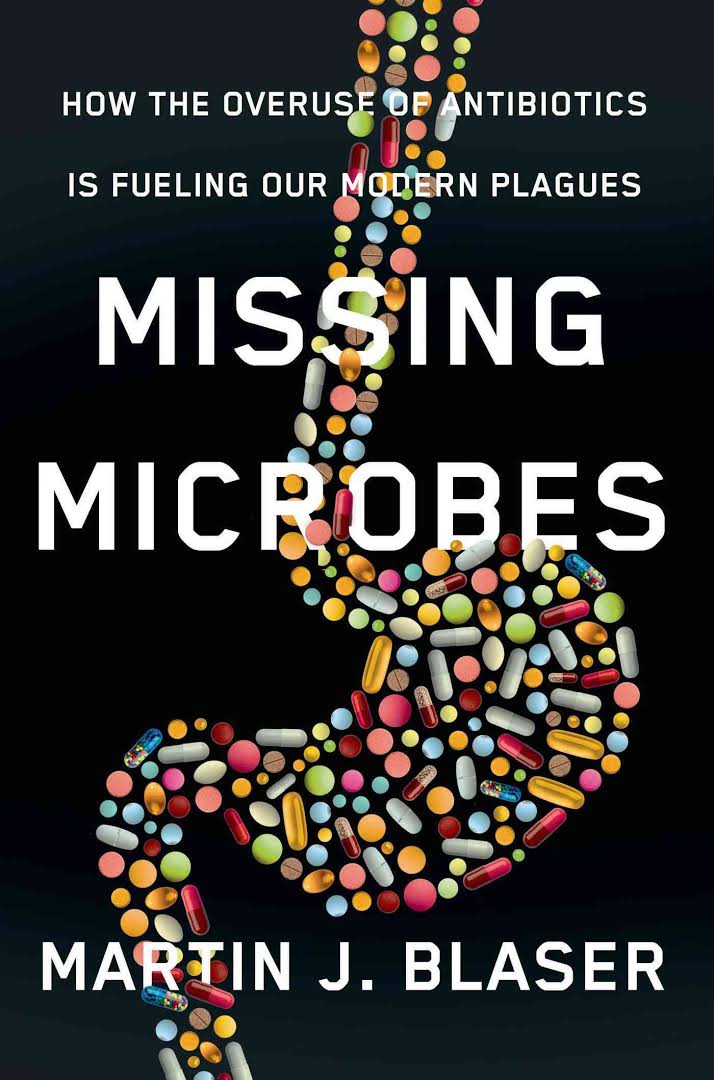
Missing Microbes - by Dr. Martin Blaser

Wow is all I can say. The premise is that we have wiped out all the good microbes along with the pathogens in both our bodies and our environment through antibiotics, mostly. Dr. Blaser is suggesting/hypothesizing that our recent chronic diseases are a result of our badly made choice to declare war on the microbes in our environment.

I like the idea that microbes are even more important than us... I mean, just think, we came from primordial ooze, why would we think they are somehow fewer or less important that we are? Apparently we have 10 times as many microbe cells on and in our bodies than we do human cells. I remember being struck by the fact that if we removed the fecal matter from our digestive tracks we would learn that the microbes in our GI tract weigh as much as our brains... suggesting, they are as important an organ to our survival as our brains... I liked that idea.

It was also suggested that perhaps it is the microbes in and on our bodies that 'made' us human... That combination of microbes allowed us to evolve in this manner.... I like that idea, too.


We have explored/discussed microbes and health in a few other places:
Here, for example about mood and digestion.
here, in the very first month of writing my blog about health, travel, genealogy and fiber art.
And here, where we discuss gluten, but ignore what Dr. Blaser has suggested about the fact that perhaps we are killing the microbes which can process the gluten in our systems.

All I know is that I am going to do my best now to eat more fermented vegetables/foods to reintroduce some beneficial microbes, not going to wash my hands as often (some people think that is so gross, but if I know I have been around someone who is fighting a cold/sick I will wash my hands), I will add some prebiotics to my diet,  What else???? Hmmm. I may be crazy, but I am a one person army to reintroduce healthy microbes in to my world and that of my family... whether they want them or not!

Monday, September 21, 2015

Gut Microbiome

I am so excited! I only learned about it this morning, and the course has already begun - a free on-line course on Coursera about the human gut microbiome. Of course the lead professor is from Australia (I assume from his accent) because that is where I originally heard about 'transpoosions'. On a Radiolab podcast interviewing folks in Australia who were doing leading edge research on the bacteria in our digestive tracks.

I spend a lot of time now experimenting with fermenting foods. I have some pickles going right now, plus some yogurt and some asparagus. I recently read that asparagus is particularly good as a pre-biotic, the food we eat which our gut microbiome wants as their food. Other prebiotics include foods such as Jerusalem artichokes and raw onions. (I have been adding raw onions to my salads much to the dismay of my house guests.)

I just found this list of prebiotic foods:

Dandelion greens.
Garlic and onions (and any vegetables in that family, e.g. leeks)
Asparagus.
Bananas.
Chicory (used in coffee substitutes)

We need to find a lawn with lots of dandelions now, don't we?

Here is a link to one of the Radiolab podcasts on the subject. Poop the Magic Gut Cure I am not sure this is the one I first heard, but I love Radiolab, so I am sure it'll be a great listen.

The course is based out of Colorado.


And here one can see the pickles, the asparagus, the kombucha and my attempt at hard cider....

Monday, June 29, 2015

Decreased social anxiety among young adults who eat fermented foods -- ScienceDaily

I am still learning how to share interesting information through my blog. Apparently just clicking on the Blogspot icon at the bottom of the article does not share the entire article, just a link. (see below)

Given the interesting subject matter, it occured to me I might want to follow one or two of the authors/researchers, but that didn't prove obvious to me either, but I did find a psychiatry journal website which gives an executive summary of the article:


Highlights

  • •This study investigated the relationship between fermented foods and social anxiety.
  • •Fermented food consumption, neuroticism, and exercise predicted social anxiety.
  • •Fermented food consumption and neuroticism interacted to predict social anxiety.
  • •Fermented foods should be further investigated as an intervention for social anxiety.

Abstract

Animal models and clinical trials in humans suggest that probiotics can have an anxiolytic effect. However, no studies have examined the relationship between probiotics and social anxiety. Here we employ a cross-sectional approach to determine whether consumption of fermented foods likely to contain probiotics interacts with neuroticism to predict social anxiety symptoms. A sample of young adults (N=710, 445 female) completed self-report measures of fermented food consumption, neuroticism, and social anxiety. An interaction model, controlling for demographics, general consumption of healthful foods, and exercise frequency, showed that exercise frequency, neuroticism, and fermented food consumption significantly and independently predicted social anxiety. Moreover, fermented food consumption also interacted with neuroticism in predicting social anxiety. Specifically, for those high in neuroticism, higher frequency of fermented food consumption was associated with fewer symptoms of social anxiety. Taken together with previous studies, the results suggest that fermented foods that contain probiotics may have a protective effect against social anxiety symptoms for those at higher genetic risk, as indexed by trait neuroticism. While additional research is necessary to determine the direction of causality, these results suggest that consumption of fermented foods that contain probiotics may serve as a low-risk intervention for reducing social anxiety.

So, there you have it.... A summary.

Of course the question becomes what fermented foods....? Beer? Wine? Kombucha? Cheese? Yogurt seems obvious, and sauerkraut... but how much sauerkraut can you eat? I think most pickles are 'pickled' with vinegar, which might be the only fermented ingredient... so, does that mean we need to make our own vinegar? So, I am a little uncertain about whether I am eating enough probiotic food to keep my anxiety levels to a manageable level or if I should eat more fermented food. (See, you can perceive my anxiety level in that statement alone!)

Decreased social anxiety among young adults who eat fermented foods -- ScienceDaily