Showing posts with label beer. Show all posts

Wednesday, June 8, 2016

Michael Pollan's "Cooked" Series and Belly Button Beer

I enjoyed the second 2 episodes of "Cooked" last night (as I started a new needle point. I mention that because I could stitch and listen, rather than watch.) I read, and loved, the book a couple of years ago. As my readers might imagine, I was particularly intrigued by the 'earth' section of the book, about fermentation. As perhaps my readers recall, I make my own kefir (both milk and water), pickles, yogurt, kombucha (I've tried both coffee and tea), and hard cidre. I even have a 1/2 bottle of concord grapes percolating, but I do not have high hopes for that.

I was going to share this following tidbit from the Week Magazine regardless, but combining these two pieces of information seemed worthwhile.

In the television show, Michael Pollan indicates that we do not know when humanity took the bubbling wheat porridge and cooked it to make bread. He does indicate that perhaps we started farming so that we might have alcohol... as we gathered and then located a source of sugar that we might turn in to alcohol. He does not mention, as one might conclude, that bread is the solid form of beer.... But that is neither here nor there for my observation.

I was intrigued by Michael Pollan's idea that a bowl of porridge was left on it's own by mistake and yeast and other microbial life forms found their way to that source of food. For here we have a delightful story of young people naturally recreating that fermentation 'Big Bang':


Australian brewers have created a tangy new beer using an unusual, locally sourced ingredient: yeast grown from their own belly-button fluff. Staff at Melbourne’s 7 Cent craft brewery began by swabbing their belly buttons and cultivating yeast colonies. One fragrant strain went into Belly Button Beer, a white beer with hints of “fresh orange zest and toasted coriander seeds,” the brewery said. Company founder Doug Bremner said drinkers shouldn’t be put off by the yeast’s origins. “Yeast is yeast,” he said. “This beer is no different from any other beer out there.

Though the Week Magazine put the above tidbit in their 'It Must Be True, I Read it in the Tabloids' section of their publication, the Smithsonian shared it here: Australians make beer out of belly button lint

Monday, November 23, 2015

War and Pizza

This is a podcast episode worth listening to, from Radiotopia's 99% Invisible. I had long time ago heard that the reason we have some much processed food was because the military needed foods that could be shipped overseas during World War II and rather than have those companies go out of business, they shifted to marketing toward the American house wife. The tack the advertisers took was to make life easier for housewives, but we know how that all turned out.

This is even more interesting... that there had to be a commercial component to the food they developed so that if we should go to war again the commercial companies had the technology already and could ramp up easily.

Honestly, this is disgusting. I hope it gives me the incentive to eschew the processed foods even more. But, my goodness, that seems to mean so much time in the kitchen... we should all be shopping the perimeter of the super market; never go through the interior aisles.

Another thought... if processed food can last for up to 3 years, why are we throwing away food if it is past it's freshness date printed on the package? Sounds like another reason to waste and buy more, doesn't it? I never listened to those dates any way, actually, and haven;t (yet) suffered.

And, WTF - no studies on the long term effects of this frankenfood? WTF!!?! It makes me sick. Literally, I am sure.

Where is that affordable chef/cook when you need her/him?


Households tend to take pantry food for granted, but canned beans, powdered cheese, and bags of moist cookies were not designed for everyday convenience. These standard products were made to meet the needs of the military.

Food and combat have been intertwined ever since the earliest military rations. Ancient Sumerians rode into battle with barley cakes and beer. In the 11th and 12th Centuries, Mongols preserved their meat by storing it under saddles, using salt from the horses and the weight of riders as a mobile preservation technique.

Drying, salting, smoking and pickling were the go-to methods until 1795, when the French government held a contest to find a new preservation technique. A chef Nicolas Appert came forward with canning, which revolutionized food preservation.

During World War II, however, the United States realized there remained a need for preserved food production to ramp up more quickly in times of crisis, and started investing heavily in food technologies.

In the 1950s, the Combat Feeding Directorate was established at the Natick Soldier System Center on a US Army Base in Massachusetts. Today it remains the epicenter of the modern military diet.

The primary purpose of the Natick Center is to overcome the challenges inherent in food: it spoils, grows mold, or it loses flavor. And their food scientists have come up with inventions like the MRE (Meal Ready-to-Eat).

MREs come packaged with chemical heaters to warm food, oxygen scavengers to prevent spoilage and carefully-concocted meals made to be edible for years after their creation date.


MREs may also contain condiments and side dishes, all the various packets tucked into a lightweight pouch and designed to survive in any climate.

One of the Natick Center’s current goals is to finally grant a longtime wish from servicemen: pizza on the battlefield. They hope to have a shelf-stable pizza, which would last for years without refrigeration, available to the military by 2017. And, soon after that, in your grocery store.

As a means of cost reduction, and as way to readily tap the private sector during wartime, the government has forged a series of public/private partnerships with commercial food producers. The military’s technology and influence can be seen in effectively every grocery aisle.

Many military innovations make their way, in some form or another, into American kitchens. TV dinners, freeze-dried coffee, semi-moist cookies, and condiment packets, were all developed to feed soldiers, sailors, and pilots stationed remotely.

While all these processed and packaged foods have become familiar fare for the American household, most of these products are made to last far longer than the average civilian would need.

There haven’t been many studies about the long-term health impacts of the specific food technologies pioneered by the military, but whether its good for us or not, in the years to come, pizza is moving out of the freezer section and onto room-temperature shelves.

Reporter Tina Antolini, host of the podcast Gravy, spoke with Anastacia Marx de Salcedo, author of Combat-Ready Kitchen; Stephen Moody, the Director of Combat Feeding at the Natick Soldier Research, Development, and Engineering Center and Louisiana-native Ben Armstrong, who spent five years in the United States Marine Corps.

Saturday, August 15, 2015

Hill Farmstead Brewery

Ok, this is not a blog about beer.... But this beer is pretty damn fine and I am mentioning it because they have used genealogy of sorts to name their beers. They have an Ancestral series of brews.

I have tried Mary, Edward, & Legitimacy #3. All very nice.

I know nothing about the brewers, and their web site doesn't seem to help me add to my information. All it says on the 'About Us' page of their web site is:

Hill Farmstead Brewery is the culmination of many years of travel and insight—of experience and education—of friendships and explorations.

The brewery is the revival and continuation of 220 years of Hill heritage and hand crafted history in North Greensboro, Vermont.

Its logo is retrieved from a sign that once hung in Aaron Hill's (our great(x3) grandfather) tavern, just up the hill, in the early 1800s.
And here is the logo - copied from their web site.

Their mission:

To hand craft succinct, elegant beers of distinction and to revive and diversify the farmscape of the Hill Farmstead in Greensboro...

If you are ever in the area - on a Wednesday thru Saturday - I'd serious think of getting some of their beer.

Friday, November 14, 2014

Charcoal's Gourmet Burgers in New Orleans

Charcoal's is a fun little burger joint on Magazine Street. Upstairs there is a balcony overlooking the street, which on warm nights (and Mardi Gras), I should imagine is quite pleasant.

I particularly liked it because one can get burgers made of animals such as bison, antelope, deer (venison) and elk - not to mention the 'normal' burgers such as shrimp, salmon, beef, turkey, etc.

They didn't blink when I asked for my burger to come without a bun and even suggested making it a lettuce wrap - which I thought was quite decent of them. (Obviously chefs and waitstaff are running in to people who are trying be eat gluten-free.) They also have alcohol-free beer for those of us who are not yet gluten-free, but are also trying to cut out alcohol. What a cluster F, eh?

Anyway, they can be found at 2200 Magazine Street. Good for a casual, but different burger.

Sunday, October 19, 2014

The Cheeky Monk - Belgian Beer Cafe

The Cheeky Monk is a fun place if one is a beer lover - I was amazed at the number of taps and beers on draught. There were so many taps it's almost as if the bartender was in jail!

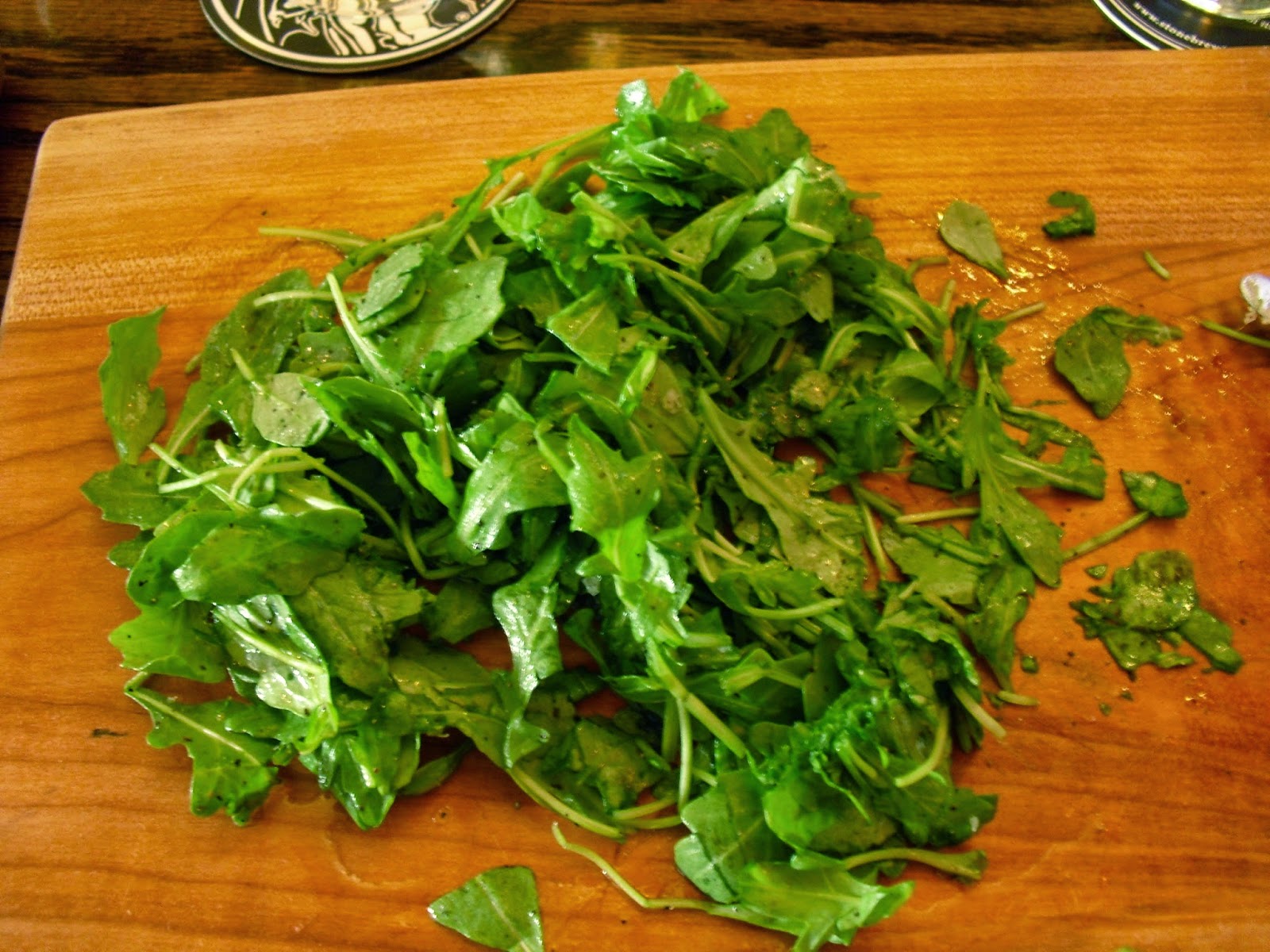
I enjoyed a lovely arugula, sorrel and lemon salad and some fried (which was unexpected) gougères - also served with the arugula salad.

Turns out there are three locations - I did not expect that, it seemed like such a unique place; I went to the location on Colfax just down the street from the state Capital. In fact, it was an employee at the Courthouse who suggested the place. (I was hoping for weiner schnitzel, but my health is better off with the salad!) The other locations are in Westminster, Co and Winter Park, Co.

The gougères with the arugula salad - it cam with two mustards, too.

I confess I had already dug in before taking the photograph.

I also tried two alcoholic beverages... given I was lunching, my choice felt quite extravagant. I had the locally brewed Stem Cider Remedy - 6.8% Alcohol by Volume - and the Hibiscusicity by the Stone Brewing Company. I did not love either, but I was glad to have tried some new beers/beverages.

BTW - apparently this cafe gets two kegs of Pliny the Younger which was featured on NPR as the best and hardest to get beer in the USA. I think the fact the Cheeky Monk gets two kegs is impressive because I thought I heard one could only buy it at the brewery. Here's what the Brewery says about it's availability:

Availability
Pub draft only, VERY limited distribution locally and to distributors on draft only, seasonal- released at our pub the first Friday of February and is available for just 2 weeks, available at select accounts during February.