Saturday, February 13, 2016

1919 - Demobilization Memos February


Herb's section doesn't get released until the third group, in May. It behooves Herb to make sure all his paperwork is in order so that his Section can leave in a timely manner.


Thursday, February 4, 2016

Using a Mother’s Microbes to Protect Cesarean Babies

Fascinating stuff. Dr. Dominguez-Bello was a lecturer in my course on the human microbiome on Coursera.

Clearly I would rather get my microbiome from Mom, not the 'less-scrubbed' areas in the delivery room. Ick. 

I took this article, written by Sandra Blakeslee, from the New York Times on February 1st.


The first germs to colonize a newborn delivered vaginally come almost exclusively from its mother. But the first to reach an infant born by cesarean section come mostly from the environment — particularly bacteria from inaccessible or less-scrubbed areas like lamps and walls, and skin cells from everyone else in the delivery room.

That difference, some experts believe, could influence a child’s lifelong health. Now, in the first study of its kind, researchers on Monday confirmed that a mother’s beneficial microbes can be transferred, at least partially, from her vagina to her baby after a C-section.

The small proof-of-principle study suggests a new way to inoculate babies, said Dr. Maria Gloria Dominguez-Bello, an associate professor of medicine at New York University and lead author of the report, published on Monday in Nature Medicine.

“The study is extremely important,” said Dr. Jack Gilbert, a microbial ecologist at Argonne National Laboratory who did not take part in the work. “Just understanding that it’s possible is exciting.”

But it will take further studies following C-section babies for many years to know to what degree, if any, the method protects them from immune and metabolic problems, he said.

Some epidemiological studies have suggested that C-section babies may have an elevated risk for developing immune and metabolic disorders, including Type 1 diabetes, allergies, asthma and obesity.

Scientists have theorized that these children may be missing key bacteria known to play a large role in shaping the immune system from the moment of birth onward. To replace these microbes, some parents have turned to a novel procedure called vaginal microbial transfer.

A mother’s vaginal fluids — loaded with one such essential bacterium, lactobacillus, that helps digest human milk — are collected before surgery and swabbed all over the infant a minute or two after birth.

An infant’s first exposure to microbes may educate the early immune system to recognize friend from foe, Dr. Dominguez-Bello said.

Friendly bacteria, like lactobacilli, are tolerated as being like oneself. Those from hospital ventilation vents or the like may be perceived as enemies and be attacked.

These early microbial interactions may help set up an immune system that recognizes “self” from “non-self” for the rest of a person’s life, Dr. Dominguez-Bello said.

In the United States, about one in three babies are delivered by C-section, a rate that has risen dramatically in recent decades. Some hospitals perform the surgery on nearly seven in ten women delivering babies.

An ideal C-section rate for low-risk births should be no more than 15 percent, according to the World Health Organization.

Dr. Dominguez-Bello’s study involved 18 babies born at the University of Puerto Rico hospital in San Juan, where she recently worked. Seven were born vaginally and 11 by elective C-section. Of the latter, four were swabbed with the mother’s vaginal microbes and seven were not.

Microbes were collected on a folded sterile piece of gauze that was dipped in a saline solution and inserted into each mother’s vagina for one hour before surgery. As the operations began, the gauze was pulled out and placed in a sterile collector.

One to two minutes after the babies were delivered and put under a neonatal lamp, researchers swabbed each infant’s lips, face, chest, arms, legs, back, genitals and anal region with the damp gauze. The procedure took 15 seconds.

Dr. Dominguez-Bello and her colleagues then tracked the composition of microbes by taking more than 1,500 oral, skin and anal samples from the newborns, as well as vaginal samples from the mothers, over the first month after birth.

For the first few days, ambient skin bacteria from the delivery room predominated in the mouths and on the skin of C-section babies who were not swabbed, Dr. Dominguez-Bello said.

But in terms of their bacterial colonies, the infants swabbed with the microbes closely resembled vaginally delivered babies, she found, especially in the first week of life. They were all covered with lactobacilli.

Gut bacteria in both C-section groups, however, were less abundant than that found in the vaginally delivered babies.

Anal samples from the swabbed group, oddly, contained the highest abundance of bacteria usually found in the mouth.

The results show the complexity of labor, said Dr. Alexander Khoruts, a microbial expert and associate professor of medicine at the University of Minnesota. “It cannot be simplified to a neat, effortless passage of the infant through the birth canal,” he said.

As the month progressed, the oral and skin microbes of all infants began to resemble normal adult patterns, Dr. Dominguez-Bello said. But fecal bacteria did not, probably because of breast or formula feeding and the absence of solid foods.

The transfer fell short of full vaginal birth-like colonization for two reasons, Dr. Dominguez-Bello said. Compared to infants who spent time squeezed inside the birth canal, those who were swabbed got less exposure to their mother’s microbes.

And all infants delivered by C-section were exposed to antibiotics, which also may have reduced the number and variety of bacteria colonizing them.

A larger study of vaginal microbial transfer is underway at N.Y.U., Dr. Dominguez-Bello said. Eighty-four mothers have participated so far.

Infants delivered both by C-section and vaginally will be followed for one year to look for differences in the treated and untreated groups and to look for complications. Thus far the swabbing has proved entirely safe.

The procedure is not yet recommended by professional medical societies, said Dr. Sara Brubaker, a specialist in maternal and fetal medicine at N.Y.U. Until more is known, physicians are hesitant to participate.

“But it has hit the lay press,” she said. “Patients come in and ask for it. They are doing it themselves.”

Dr. Brubaker is one of them. When her daughter was born three and a half months ago, she arranged to have her baby swabbed.

Sunday, January 31, 2016

White? Black? A Murky Distinction Grows Still Murkier

Here is an article by Carl Zimmer at the New York Times. I found it here. I have been reading the book called One Drop by Bliss Broyard about her Creole father and I have been thinking about race and ethnicity. It is very interesting to reflect and to think about the shit we have created because of racism. I also happened to have listened to a podcast on The American Life - called Family Physics - about what we see based on expectations.

The "Pocahontas Exception" made me laugh out loud. It's interesting to note that Ms. Broyard mentioned a similar concept in New Orleans - as 'prominent' families in New Orleans also frequently had blended racial families and some members choosing to live in a variety of different cultures based on how they are perceived by the 'powers that be'.


In 1924, the State of Virginia attempted to define what it means to be white.

The state’s Racial Integrity Act, which barred marriages between whites and people of other races, defined whites as people “whose blood is entirely white, having no known, demonstrable or ascertainable admixture of the blood of another race.”

There was just one problem. As originally written, the law would have classified many of Virginia’s most prominent families as not white, because they claimed to be descended from Pocahontas.

So the Virginia legislature revised the act, establishing what came to be known as the “Pocahontas exception.” Virginians could be up to one-sixteenth Native American and still be white in the eyes of the law.

People who were one-sixteenth black, on the other hand, were still black.

In the United States, there is a long tradition of trying to draw sharp lines between ethnic groups, but our ancestry is a fluid and complex matter. In recent years geneticists have been uncovering new evidence about our shared heritage, and last week a team of scientists published the biggest genetic profile of the United States to date, based on a study of 160,000 people.

The percentage of self-identified European Americans who have one percent or more of African ancestry. Credit 23andMe


The researchers were able to trace variations in our genetic makeup from state to state, creating for the first time a sort of ancestry map.

“We use these terms — white, black, Indian, Latino — and they don’t really mean what we think they mean,” said Claudio Saunt, a historian at the University of Georgia who was not involved in the study.

The data for the new study were collected by 23andMe, the consumer DNA-testing company. When customers have their genes analyzed, the company asks them if they’d like to make their results available for study by staff scientists.

Over time the company has built a database that not only includes DNA, but also such details as a participant’s birthplace and the ethnic group with which he or she identifies. (23andMe strips the data of any information that might breach the privacy of participants.)

The scientists also have been developing software that learns to recognize the origins of the short segments of DNA that make up our genomes. Recently they used their program to calculate what percentage of each subject’s genomes was inherited from European, African or Native American forebears.

“This year we saw that we were in a great position to do the analysis,” said Joanna L. Mountain, senior director of research at 23andMe.

On average, the scientists found, people who identified as African-American had genes that were only 73.2 percent African. European genes accounted for 24 percent of their DNA, while .8 percent came from Native Americans.

Latinos, on the other hand, had genes that were on average 65.1 percent European, 18 percent Native American, and 6.2 percent African. The researchers found that European-Americans had genomes that were on average 98.6 percent European, .19 percent African, and .18 Native American.

These broad estimates masked wide variation among individuals. Based on their sample, the resarchers estimated that over six million European-Americans have some African ancestry. As many as five million have genomes that are at least 1 percent Native American in origin. One in five African-Americans, too, has Native American roots.

Dr. Mountain and her colleagues also looked at how ancestry might influence ethnic identification.

Most Americans with less than 28 percent African-American ancestry say they are white, the researchers found. Above that threshold, people tended to describe themselves as African-American.

Katarzyna Bryc, a 23andMe researcher and co-author of the new study, didn’t want to speculate about why people’s sense of ethnic identity pivots at that point.

The mean proportion of African ancestry for African-Americans across the United States. African-Americans in Georgia and South Carolina have the highest average percentage of African ancestry among African-Americans in the United States. Credit 23andMe


“We can only take it so far as geneticists,” she said.

The scientists also linked geographical patterns to their subjects’ ancestries. Latinos in the Southwest had high levels of Native American DNA, they found, while Latinos in the Southeast had high levels of African DNA.

The genes of African-Americans varied strikingly from state to state. In Oklahoma, the researchers estimated, 14 percent of African-Americans have genomes that are at least 2 percent Native American. This high percentage is probably due to the unique history of the state.

Some Native American tribes in the South, such as the Cherokee and Choctaw, kept African slaves. When they were expelled to Oklahoma in the 1830s, they brought the slaves with them. In some tribes, Native Americans and African slaves intermarried, and their descendants continue to live in Oklahoma today.

Dr. Saunt was fascinated in particular by the genetic findings among people in South Carolina. Dr. Mountain and her colleagues estimated that 13.3 percent of European-Americans in South Carolina have genes that are at least 1 percent African in origin.

But the researchers also found that African-Americans in South Carolina have among the lowest percentages of European DNA of any African-American population in the United States.

At one point, Dr. Saunt noted, the percentage of South Carolina residents who were slaves was greater than in any other state. But there was also a large population of freed slaves in Charleston permitted to interact with whites.

“We know lots of planters had mistresses in Charleston, and they obviously had children together,” said Dr. Saunt. “So what happened to those children? Some remained in the African-American community, and some moved into the white community when they were able to.”

Jeffrey C. Long, an anthropologist at the University of New Mexico who was not involved in the study, cautioned that the research was not based on a random sample of Americans. Instead, Dr. Mountain and her colleagues studied only people who were curious enough about their DNA to pay for a test.

“Perhaps people who have mixed ancestry are more interested in their ancestry than people who don’t think they have mixed ancestry,” Dr. Long said.

David Reich, a geneticist at Harvard University and a co-author on the new study, acknowledged this was a reasonable concern. “It’s classic survey bias,” he said. But Dr. Reich also noted that the new results were consistent with smaller studies done in the past.

As genetic databases grow, Dr. Reich predicted it would be possible to get even more detailed insights into American history. DNA may be able to illuminate the movements of people across the United States, such as the Great Migration that took African-Americans from the South to Chicago.

“We’re in striking distance of that now,” Dr. Reich said.

Correction: December 24, 2014
An earlier version of this article referred incorrectly to South Carolina’s slave population. At one point, the percentage of residents of the state who were slaves was greater than in any other state; it is not the case that South Carolina had more slaves than any other state.

A version of this article appears in print on December 26, 2014, on page A20 of the New York edition with the headline: Racial Boundaries Grow Fuzzy as Ancestry Map Emerges From Study

Saturday, January 30, 2016

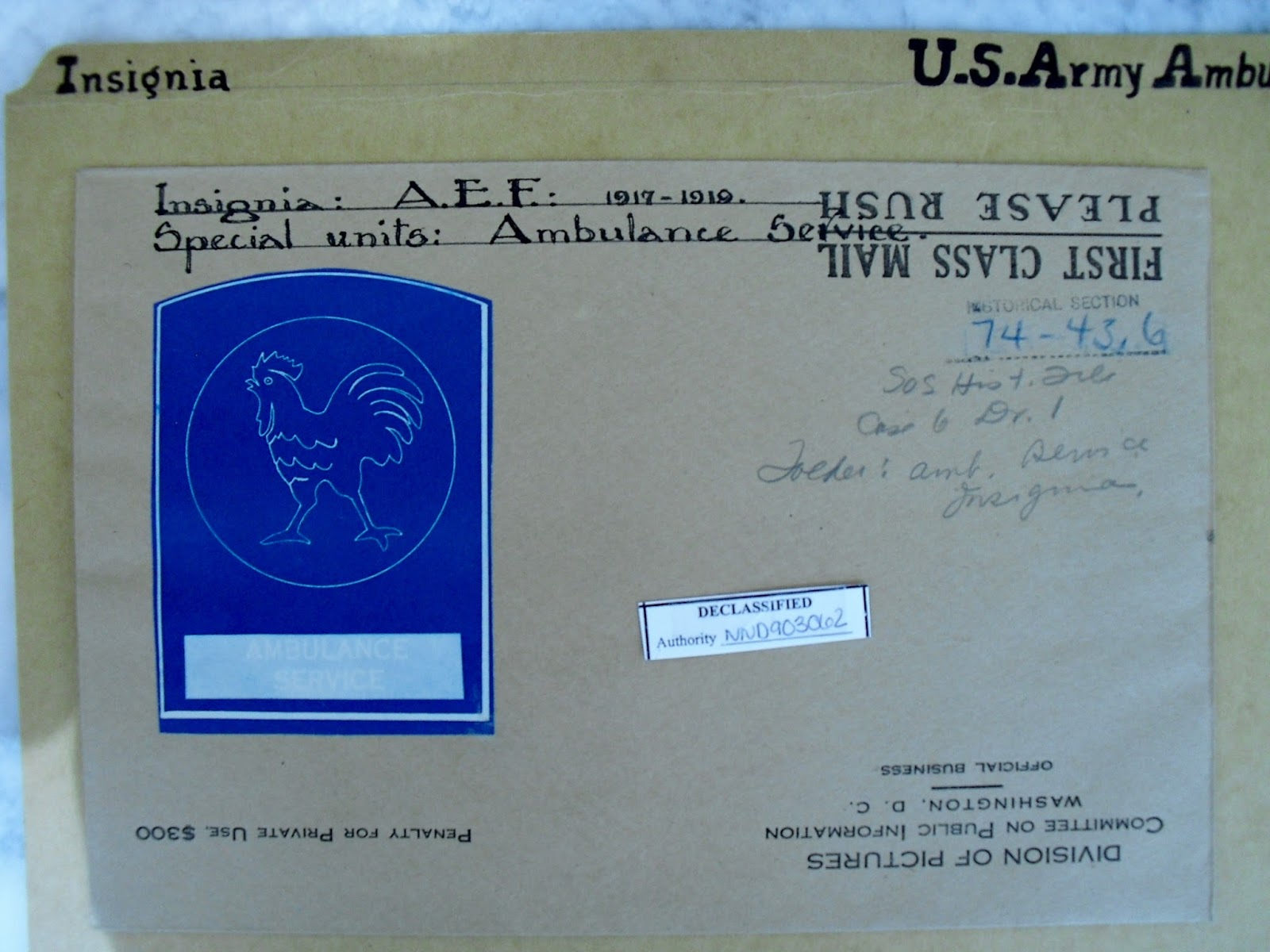
The Cock of Verdun

Cock of Verdun

I found the insignia at the National Archives in College Park, MD. Apparently a few ideas were considered:


We have already met Herb Blake on a previous permission.

If Herb walks, we have a couple routes:


I once worked in Saint Dizier when I was working on an internship - one can see the town to the west on the map. A manufacturing town with some fine dining near by... but this was back in the 90's.

January 30, 1919
Dearest Mother + all,

The greater part of the Division left today en route for Colmar Alsace, not far from the Rhine. It included all the troops but one regiment and all the horse drawn vehicles, all of which go by train. The motor vehicles, including the Section, start by road February 4th. It will be a two days trip by road, I think and probably very interesting. It will be a cold trip, of course, because the weather is quite brisk lately, but we all have lots of clothes + blankets to wrap up in. at any rate, I should be willing to walk if necessary for the sake of getting out of the Grand Duchy.

I had a very nice letter from Aunt Birdella a few days ago in reply to one I wrote back in December I think.

Tom wrote me from Syracuse and posted me on all available news about the boys I used to know. Of course they were practically all in the Service, are yet, I suppose and we’re all out of touch. I’d like especially to know where Kimber and Morris are (they were with me at 193 Sterling Place, you know) and Steve Lee who was working in the City before he went to Plattsburgh.

Your letters of January 6th and 10th came together three days ago. Also two bundles of papers, which I was very glad to get.

I can’t understand why you always get my mail in batches. I don’t write my letters on that system. But then there are plenty of incomprehensible things about the army.

For the next week at least we shan’t get any mail. The mail follows the Division Headquarters and since for a week or so we shan’t be in touch with HQ we’ll just be out of luck. All sorts of little things seem like calamities since the Armistice.

I haven’t heard from either Mr. Friedman or from Charlie in several weeks. I imagine they’re both very busy.

I heard a rumor about Herb Blake’s being married some time ago though I don’t know just where. Evidently it’s true.

It looks as if I would have a chance to go on a permission again before coming home. I’m not crazy about the idea but if the opportunity offers I shall take it. It will break the monotony for two or three weeks.

I put on my second service stripe this week, with a sincere hope that it may be the last. Two are quite enough.

The Ambulance Service has at last been recognized as being something different from the Medical Department. The insignia adopted is a white “Cock of Verdun” on a circular maroon background to be worn on the left sleeve at the shoulder somewhat as the various divisional insignia. It’s only fair to distinguish the USAAS from the hospital attendants. What with service stripes, chevrons and all my sleeves will be nearly full.

With best to all
Your affectionate son,
Herb

Thursday, January 28, 2016

200th Anniversary of the Year Without a Summer: How did you ancestors survive endless winter?

A cousin kindly sent me this article (which can be found here, from a blog called Findmypast.) I have a document, found amongst my great aunt papers, dated from 1815 from the Hebron, NY area. Didn't Joseph Smith come from around there? There is a man's name on the document, but I am afraid I do not recognize it as a member of my family.... So, the oldest document I have in my possession is a total mystery to me.

I will have to start thinking about this in the context of my family...


Historical anniversaries give us a chance to look back on some of the remarkable events in history and reflect on their impact today.

They're intriguing when thinking about our own family history and the world our ancestors lived in. Oftentimes we can determine motivations for their footsteps that we've so carefully traced through time.

1816: A global climate catastrophe

200 years ago, our ancestors experienced what historians call "the last great subsistence crisis in the Western world" - food in both America and Europe became scarce, resulting in widespread famine and economic crises in many areas.

Agriculture struggled because the normally stable summer temperatures of New England, Central Canada and Western Europe were highly abnormal in 1816. Overall, global temperatures fell significantly and the aforementioned areas experienced frost, snow and cold temperatures during the prime crop-growing months of the years.

The world was already in a long period of global cooling since the 1300's, known by climate historians as "The Little Ice Age." This larger period in history was already causing agricultural trouble for humans and in 1816 the issues were exacerbated to an extreme degree.

Mysterious red fog plagues America

In the spring and summer of 1816, many throughout the eastern United States observed a strange "dry fog" that persistently hung around. The fog dimmed sunlight and bathed everything in a strangely red light - it wasn't moist, and couldn't be dispersed by rainfall or wind.

All throughout New England, temperatures dropped below freezing in May, June, July and August. The grounds froze and the fields were as barren as they were in winter. Towns located at high elevations - where farming was difficult even in good conditions - suffered the most.

Corn was hardly worth harvesting, and many wheat crops were devastated, making bread-products very scarce. This resulted in sky-high prices for food and many from the lower classes risked starvation. For instance, a bushel of oats cost the equivalent of $1.55 today in 1815 but increased to the equivalent of $12.83 today in 1816. That's an increase of over 700%!

While the western United States did not suffer, transporting food at this point was very difficult - the country had yet to be linked together by reliable rail transport, forcing most communities to rely on local production for food supplies.

How Joseph Smith and your ancestors were affected

The struggles in New England caused a mass emigration from the area and greatly sped up Westward expansion in the United States. If your family migrated west around this time, it's very possible that they moved due to these agricultural struggles or food shortages.

Western New York and the Northwest Territory (now the Great Lakes region) were very popular destinations for families with ruined land. An estimated 10,000 to 15,000 people emigrated from Vermont, including the family of a young Joseph Smith.

The Smith family moved to Palmyra, New York, to join other members of their family. It was here that Smith began his path to founding the Latter Day Saint church - in a strange way, this climate disaster played an indirect role in initiating Joseph's journey.

Beautiful sunsets and Frankenstein: Cultural positives

Interestingly, in the same way high levels of air-born pollution today can produce some marvelous sunsets, the mysterious dry fog that covered the land did the same thing. English landscape artist J.M.W. Turner likely drew inspiration for some of his work from the sunsets of this year and elevated landscape painting to prominence through his brilliant paintings, paving the way for Americans like Thomas Cole and the Hudson River School.

The amazing sunsets and sunrises of 1816 likely inspired some of Turners most famous paintings, like this one:

J.M.W. TURNER, THE 'FIGHTING TEMERAIRE' TUGGED TO HER LAST BERTH TO BE BROKEN UP 1838-39

Elsewhere in Europe, the dreadful weather resulted in the creation of an iconic literary monster. Mary Shelley and her future husband Percy Brysshe Shelley were visiting Lord Byron in Switzerland in the summer of 1816, and the constant rain and cold precipitated a chain of events that led to Shelley writing an initial draft of Frankenstein.

What caused the climate change

Climate historians and climatologists hypothesize that this change was brought on by a massive volcanic eruption in 1815 in the Dutch East Indies (modern day Indonesia). The 1815 eruption of Mount Tambora was the biggest the world had seen for 1,300 years and resulted in between 70,000 and 100,000 deaths in the South Pacific due to the immediate effects.

This enormous eruption brought on a volcanic winter (a reduction in global temperatures due to volcanic ash and sulfuric acid in the atmosphere obscuring sunlight) that resulted in the disaster of 1816. In addition, global weather patterns were affected, ushering in wildly different seasonal temperatures:

In tracing your family's journey through time, don't overlook major events like the Year Without a Summer when constructing their story. Understanding this climate phenomenon may give you some explanation for the migration of your ancestors.

Wednesday, January 27, 2016

The Health Benefits of Knitting

My mother told me she used to knit, as many of her fellow students did, during college lectures back in the 50s.

I have been struggling feeling good about taking the time to knit... though I want to. I just feel as though I should be doing something else, something 'productive'. Now I can use this article to justify my time with the needles.

Happily, too, my mother is very excited about digital photography, so I see that she will continue to benefit from the focus required by both crafts and digital photography.

I took this from the New York Times.


About 15 years ago, I was invited to join a knitting group. My reluctant response — “When would I do that?” — was rejoined with “Monday afternoons at 4,” at a friend’s home not three minutes’ walk from my own. I agreed to give it a try.

My mother had taught me to knit at 15, and I knitted in class throughout college and for a few years thereafter. Then decades passed without my touching a knitting needle. But within two Mondays in the group, I was hooked, not only on knitting but also on crocheting, and I was on my way to becoming a highly productive crafter.

I’ve made countless afghans, baby blankets, sweaters, vests, shawls, scarves, hats, mittens, caps for newborns and two bedspreads. I take a yarn project with me everywhere, especially when I have to sit still and listen. As I’d discovered in college, when my hands are busy, my mind stays focused on the here and now.

It seems, too, that I’m part of a national resurgence of interest in needle and other handicrafts, and not just among old grannies like me. The Craft Yarn Council reports that a third of women ages 25 to 35 now knit or crochet. Even men and schoolchildren are swelling the ranks, among them my friend’s three grandsons, ages 6, 7 and 9.

Last April, the council created a “Stitch Away Stress” campaign in honor of National Stress Awareness Month. Dr. Herbert Benson, a pioneer in mind/body medicine and author of “The Relaxation Response,” says that the repetitive action of needlework can induce a relaxed state like that associated with meditation and yoga. Once you get beyond the initial learning curve, knitting and crocheting can lower heart rate and blood pressure and reduce harmful blood levels of the stress hormone cortisol.

But unlike meditation, craft activities result in tangible and often useful products that can enhance self-esteem. I keep photos of my singular accomplishments on my cellphone to boost my spirits when needed.

Since the 1990s, the council has surveyed hundreds of thousands of knitters and crocheters, who routinely list stress relief and creative fulfillment as the activities’ main benefits. Among them is the father of a prematurely born daughter who reported that during the baby’s five weeks in the neonatal intensive care unit, “learning how to knit preemie hats gave me a sense of purpose during a time that I felt very helpless. It’s a hobby that I’ve stuck with, and it continues to help me cope with stress at work, provide a sense of order in hectic days, and allows my brain time to solve problems.”

A recent email from the yarn company Red Heart titled “Health Benefits of Crocheting and Knitting” prompted me to explore what else might be known about the health value of activities like knitting. My research revealed that the rewards go well beyond replacing stress and anxiety with the satisfaction of creation.

For example, Karen Zila Hayes, a life coach in Toronto, conducts knitting therapy programs, including Knit to Quit to help smokers give up the habit, and Knit to Heal for people coping with health crises, like a cancer diagnosis or serious illness of a family member. Schools and prisons with craft programs report that they have a calming effect and enhance social skills. And having to follow instructions on complex craft projects can improve children’s math skills.

Some people find that craftwork helps them control their weight. Just as it is challenging to smoke while knitting, when hands are holding needles and hooks, there’s less snacking and mindless eating out of boredom.

I’ve found that my handiwork with yarn has helped my arthritic fingers remain more dexterous as I age. A woman encouraged to try knitting and crocheting after developing an autoimmune disease that caused a lot of hand pain reported on the Craft Yarn Council site that her hands are now less stiff and painful.

A 2009 University of British Columbia study of 38 women with the eating disorder anorexia nervosa who were taught to knit found that learning the craft led to significant improvements. Seventy-four percent of the women said the activity lessened their fears and kept them from ruminating about their problem.

Betsan Corkhill, a wellness coach in Bath, England, and author of the book “Knit for Health & Wellness,” established a website, Stitchlinks, to explore the value of what she calls therapeutic knitting. Among her respondents, 54 percent of those who were clinically depressed said that knitting made them feel happy or very happy. In a study of 60 self-selected people with chronic pain, Ms. Corkhill and colleagues reported that knitting enabled them to redirect their focus, reducing their awareness of pain. She suggested that the brain can process just so much at once, and that activities like knitting and crocheting make it harder for the brain to register pain signals. More of Stitchlinks findings are available at their website.

Perhaps most exciting is research that suggests that crafts like knitting and crocheting may help to stave off a decline in brain function with age. In a 2011 study, researchers led by Dr. Yonas E. Geda, a psychiatrist at the Mayo Clinic in Rochester, Minn., interviewed a random sample of 1,321 people ages 70 to 89, most of whom were cognitively normal, about the cognitive activities they engaged in late in life. The study, published in the Journal of Neuropsychiatry & Clinical Neurosciences, found that those who engaged in crafts like knitting and crocheting had a diminished chance of developing mild cognitive impairment and memory loss.

Although it is possible that only people who are cognitively healthy would pursue such activities, those who read newspapers or magazines or played music did not show similar benefits. The researchers speculate that craft activities promote the development of neural pathways in the brain that help to maintain cognitive health.

In support of that suggestion, a 2014 study by Denise C. Park of the University of Texas at Dallas and colleagues demonstrated that learning to quilt or do digital photography enhanced memory function in older adults. Those who engaged in activities that were not intellectually challenging, either in a social group or alone, did not show such improvements.

Given that sustained social contacts have been shown to support health and longevity, those wishing to maximize the health value of crafts might consider joining a group of like-minded folks. I for one try not to miss a single weekly meeting of my knitting group.

Tuesday, January 26, 2016

Ice cream in Luxembourg City

What do you suppose makes Herb say "Dearest Mother of Mine" now? Cute.

This is what I could find of the city of Luxembourg with what I hope is the bridge Herb mentions:
Photo taken from here


26 January 1919
Dearest Mother of Mine,

I wish I could tell you that I’m coming home very soon but I can’t do that until I know something definite. I’ve heard on pretty good authority that the first of the Ambulance Sections are to start back next month and regularly every month thereafter. However the first step in that direction is to be relieved from duty with a Division and that has not yet come about.

I had expected that we’d be moving back into France about this time but the move has been postponed until after the first. I’m not sure yet just where we are going but it will doubtless be some place in Alsace. I shall certainly be glad to get back into France. Yesterday completed two months for us in Luxembourg and I never want another two months like it.

On Friday I went in to the city of Luxembourg on business and spent a few hours in the city. It’s really a rather nice place. There are two parts to the town – the old and the new separated by a wide deep ravine with a little river at the bottom. The sides of the ravine are laid out into streets and parks with winding roads and all terraced. The two banks are spanned by a great stone bridge, from which one has a very pretty view of this quaint little valley. The town is very clean looking with pretty good streets and the public buildings are quite fine. Although it is the capital of the country the town isn’t much more than 30,000 or 40,000 I don’t believe. It is, of course, full of military police, but fortunately I had a pass. I saw a sign in a window “Ice Cream” so I went in and had some in spite of the fact that it was a cold day. That was the first I had seen since I was on permission.

The weather has been rather colder lately and today it is snowing. There hasn’t been quite so much rain and that is a comfort.

I’ve been trying to remember what I can of the girl to whom Tom is engaged. It isn’t much. Her name is, I think, Coleman and I think she is Catholic though I’m not at all sure of it. She comes from a very nice family quite well known in the town, I believe. As for herself she’s fair skinned + dark haired + very pretty – very nice manners. I really don’t know her at all though I’ve met her several times.

Before I come back I want to get some little presents for Marnie and Olive to bring with me, especially as I couldn’t get them anything for Christmas. I wish you’d suggest some things that you think they might like. Can’t you?

Your affectionate son,
Herb

Sunday, January 24, 2016

1919 - January List of Sections

And now you know why I always knew where Herb was. I found this at the National Archives.